Showing posts with label MICROPHONES. Show all posts

Tuesday, 6 July 2010

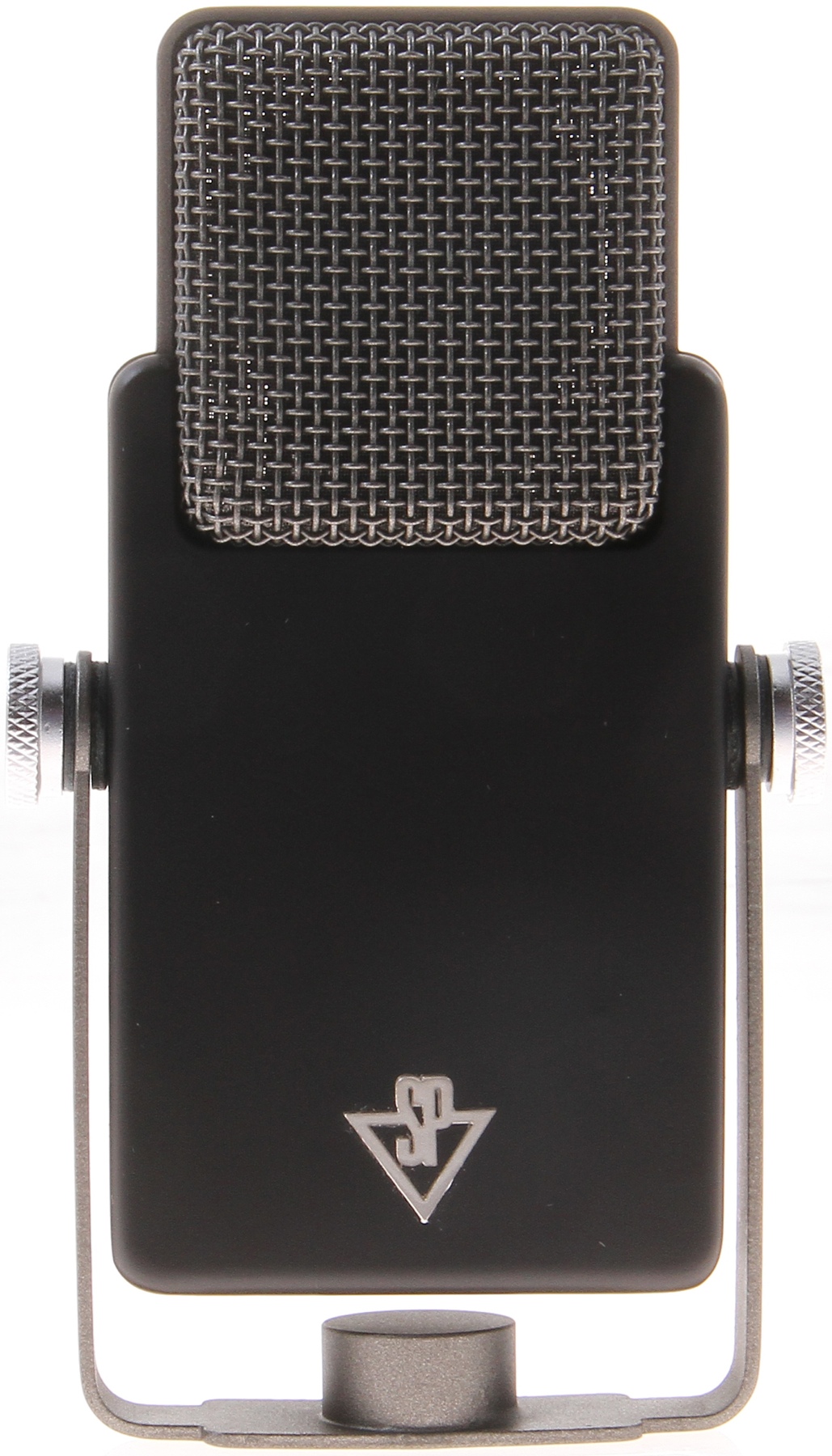
Studio Projects LSM USB Microphone


A lot of studio engineers or musician-composers nowadays would prefer having a conventional microphone for recording and a USB microphone ready in case for quick set-up recordings or even location projects, which meant buying two separate mic units. Wouldn't it be nice to have a microphone which could function as both? That's precisely the main feature of this next microphone on review here at Gizmo Guerilla, meet the Studio Projects LSM USB Microphone.

Same as other USB mics in the market, the Studio Projects LSM USB Microphone could be plugged directly to a computer via USB cable and one could start right away recording with it, but unlike other USB microphones, the Studio Projects LSM USB Microphone also has a mini-XLR output connector so that you could use it as a conventional microphone which you plug to a mixer for analog applications or to an audio interface of your choice. This is such a handy and important feature especially to those who have small home studios or "studio on the run" which is mobile.

The Studio Projects LSM USB Microphone also features a large diaphragm condenser capsule which is capable of reproducing that typical studio sound which can be attained by other recording microphones many times more expensive.


Here are its features:


Studio Projects LSM USB Microphone Features at a Glance:
Color: Black
Large-diaphragm condenser microphone
Cardioid pickup pattern
Features both mini-USB and mini-XLR outputs
Requires 48V phantom power when used over mini-XLR output
34mm "True Condenser" capsule
Offers 16-bit/48kHz recording resolution
Features a K67-style backplate
Has a single 27mm diaphragm made of gold-sputtered 6-micron Mylar

I haver tried testing this mic for only a few minutes and could say that the playback of the recording (via USB) was decent and standard and tried it direct to board as well as a conventional mic and still it was fine. There is of course a slight difference in audio quality, digital to analog, but I couldn't say it was bad. Like most digital recordings, using it the Studio Projects LSM USB Microphone by USB cable produced clearer, sharper and more transparent sound while the analog gave more warmth and the frequencies were more leveled out and shall I say intertwined. It is of course, again, a matter of preference; plus there are tons of effects and EQing that could be done to achieve the sound you want. Then again, I wouldn't recommend too much processing unless the genre of music or the audio project requires so.

Priced at US$179, the Studio Projects LSM USB Microphone is a great 2 in 1 studio tool to have around or bring along.


***A Gizmo Guerilla Music Gear Review

Monday, 5 July 2010

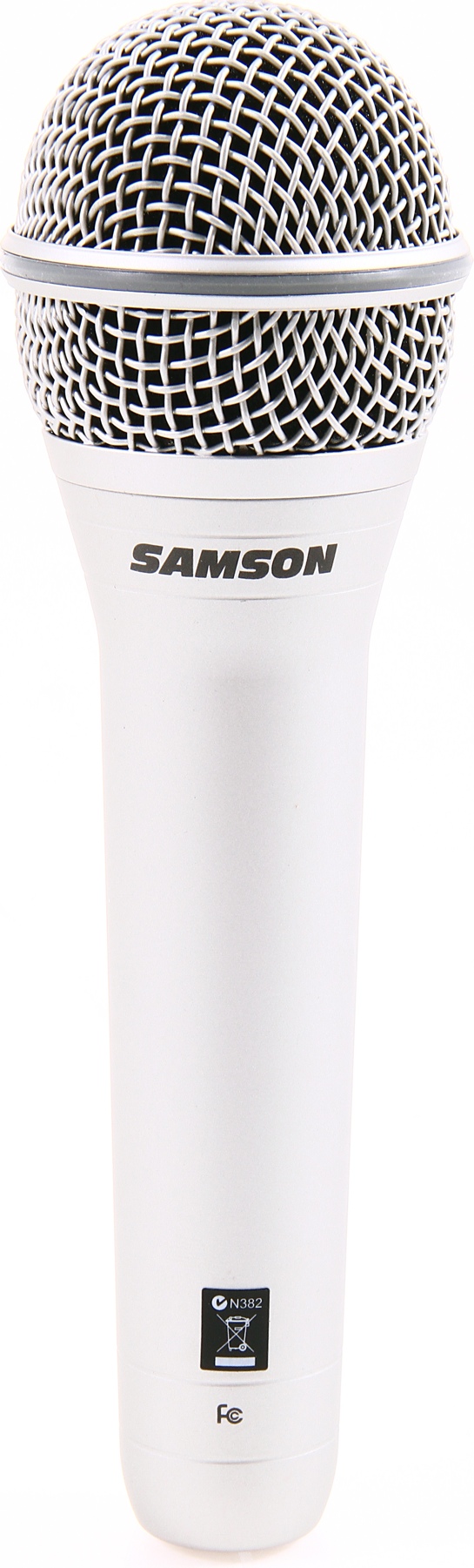
Samson Q1 USB mic

Lately, I've been very interested with USB microphones and about how they can be used for studio applications so here's another USB mic gear review, this time it's Samson Q1 USB microphone.

The Samson Q1 USB mic priced at US$69 is very affordable indeed. What's great about this USB mic package is that it also includes a Cakewalk recording software. The Samson Q1 USB mic is easy to set-up and could be plugged and used directly to a computer without any mic preamp or audio interface.

Let's check the technical features of the Samson Q1 USB mic as provided by the manufacturer:


Dynamic handheld microphone with USB interface 
Plugs in directly to any computer with USB 
Compatible with any computer based Digital Audio Workstation 
High quality A/D converter with 16-Bit, 48kHz sampling rate 
Super-cardioid pick-up pattern 
3m / 9.84' USB Cable
Includes Cakewalk Music Creator software
Tripod desk stand included


I used Sony Vegas as my DAW when I tested this mic. There were no latency problems, and as promised it was plug and play. I tried test recording some voice-overs and narrations and singing some soft tunes. Playback of the recording with no effcts and all EQs at flat sounded decent. I tried singing some loud songs and shouted, I got some clips so I made adjustments. After that, the VU meters indicated no clips but playback of the recordings revealed otherwise. Well, these are just the results from my own personal tests, but then again, since I didn't mic, I only had a few hours which means my settings could also be a culprit.

As for my final say on this music gear review, the Samson Q1 USB mic is an affordable unit which could be used for home studio or personal recordings like podcasts, however, I would not recommend it for other more serious or professional projects. Anyway, this is just one of the Samson line of USB mics which they made very affordable, they other models which are well suited for the professional studio environment. But for the price of US$69 you'd get a USB mic with cable plus a Cakewalk software,  it's a good deal.

***A Gizmo Guerilla Music Gear Review

Saturday, 3 July 2010

Takstar SM-16 recording microphone


Recently, I've been using this microphone for a couple of my projects so I've decided to write about it. I'm not actually familiar with the brand name Takstar but the microphone unit seemed decent. The Takstar SM-16 recording microphone looks sharp and sturdy plus the unit comes as a complete package with accessories. I got mine second hand, like a lot of things I own at a cheap price of HK$200 which is equivalent to US$26. The actual price online of the Takstar SM-16 is set at US$100-130, so this mic is very affordable although when you hold it it seems expensive.

Here are the Takstar SM-16's technical features:

  • Gold-plated diaphragm for accurate sound reproduction
  • Consistent cardioid polar pattern
  • High sensitivity, low self noise and low distortion
  • Wide and smooth frequency response range
  • Supplied with clip-tight elastic-suspension shock mount
  • Suitable for recording, broadcasting, as well as on-stage performance
  • Element: Back Electret Condenser
  • Polar Pattern: Uni-directional
  • Frquency Response: 20Hz-20kHz
  • Sensitivity: -35dB±2dB (0dB=1V/Pa at 1kHz)
  • Equivalent Noise Level: ≤15dB A
  • Max. Input SPL: ≥135dB (T.H.D≤1% at 1kHz)
  • Output Impedance: ≤400Ω±30% (at 1kHz)
  • Power Requirements: 48V±5V DC Phantom Power
  • Body Dimensions: ø44×150mm
The Takstar SM-16 is ideal for both studio and live applications. It has low noise but high output and the captured audio is clean and clear from the loudest to the softest sounds. It came as quite a surprise because it was the first time that I've encountered such a microphone. I just bought it because it looked good and was very cheap but I was not really expecting much quality, I was proven wrong!

The Takstar SM-16 recording microphone's package includes:
SM-16 microphone – 1pc
SH-200 shock mount – 1pc
Windscreen – 1pc
User's manual – 1pc
Aluminum carrying case with foam inlay – 1pc
Color outer box – 1pc

For it's features and price, it's a steal and good enough to produce broadcast quality recordings. Like I always say, it's not what you have but how you use it.

***A Gizmo Guerilla Music Gear Review
Friday, 2 July 2010

Nady USB-24M - affordable USB microphone


Here's an affordable entry by Nady into the USB microphone market, the Nady USB-24M. With an average price tag of US$35, this is one of the cheapest USB microphones in the market made for the musician or home producer. Let's take a look at its technical features first.

Dynamic Microphone
Frequency Response- 50 Hz to 15 kHz
Material- Plastic
Microphone Type- Handheld
Dimensions-7" Length x 2" Diameter
Connectivity Technology
Cable - 10 ft
Weight- 5 oz
Interfaces- Type A USB
Sensitivity- -55 dB
Microphone Sensitivity - -55 dB
Microphone Controls- On/Off

Same as most USB mics, the Nady USB-24M is a plug and play unit making it very easy to use. Due to the price, I was actually expecting poor sound quality, latency issues and other issues, but upon trying it out, I was quite surprised how it delivered with precision and quality what it was made to do. Having a digital conversion rate of 24-bit/96kHz, the captured sounds where very clean and clear. Its frequency response is the same like Shure's famous of most-used SM58.

Although I would not recommend it for actual broadcast quality recording, for podcasting, demo recordings and other home projects, the Nady USB-24M will do justice.


***A Gizmo Guerilla Music Gear Review

Wednesday, 30 June 2010

Shure PG42USB Microphone

One of the music industry's most famous brands when in comes to microphones, Shure has made their entry into the digital world of USB connectivity. The Shure PG42USB Microphone went into market just January of last year with a price tag of US$249-299 depending on the merchant.

Let's take a look at the technical aspects and features of this USB microphone.

Large-diaphragm condenser
Cardioid
20Hz-20kHz
USB output — plug straight into a computer
Plug and Play connectivity
Integrated preamp with gain control
Zero latency monitoring
Headphone Jack
Monitor mix control
16-bit/48kHz sample rate
15dB pad
Max SPL: 135dB
Tailored for voice, but suitable for detailed pickup of any source

The Shure PG42USB Microphone's frequency range is quite broad from 20 to 20 giving us all the frequencies we might need in any type of music or sound recording. I've just tested it for a few hours and when testing USB devices the first thing I look for are latencies; and as claimed, Zero! I tried to record some vocals only using Nuendo with all EQs flat and no effects, playback sound was crystal with enough body. Although I must say it's not the usual sound you'd get from a conventional mic but not saying that's it's bad either, just different.

Honestly, for me, I think the price is a bit high for a USB microphone but then it's Shure. Anyone who had experience in studios and performed live must know Shure's reputation.

The Shure PG42USB Microphone is plug and play like most USB mics or devices, easy to bring, set-up and use. I'd say it would be sufficient to function as a professional recording microphone to produce broadcast quality audio and affordable enough for home or small studio projects. Although a lot of studio engineers or musicians would argue that USB microphones are yet to prove their effectiveness on professional recordings, USB mics like the Shure PG42USB Microphone are becoming essential tools used by podcasters, home studios and musicians or producers who want to record their materials or projects without much stress on setting things up.


***A Gizmo Guerilla Music Gear Review

Tuesday, 29 June 2010

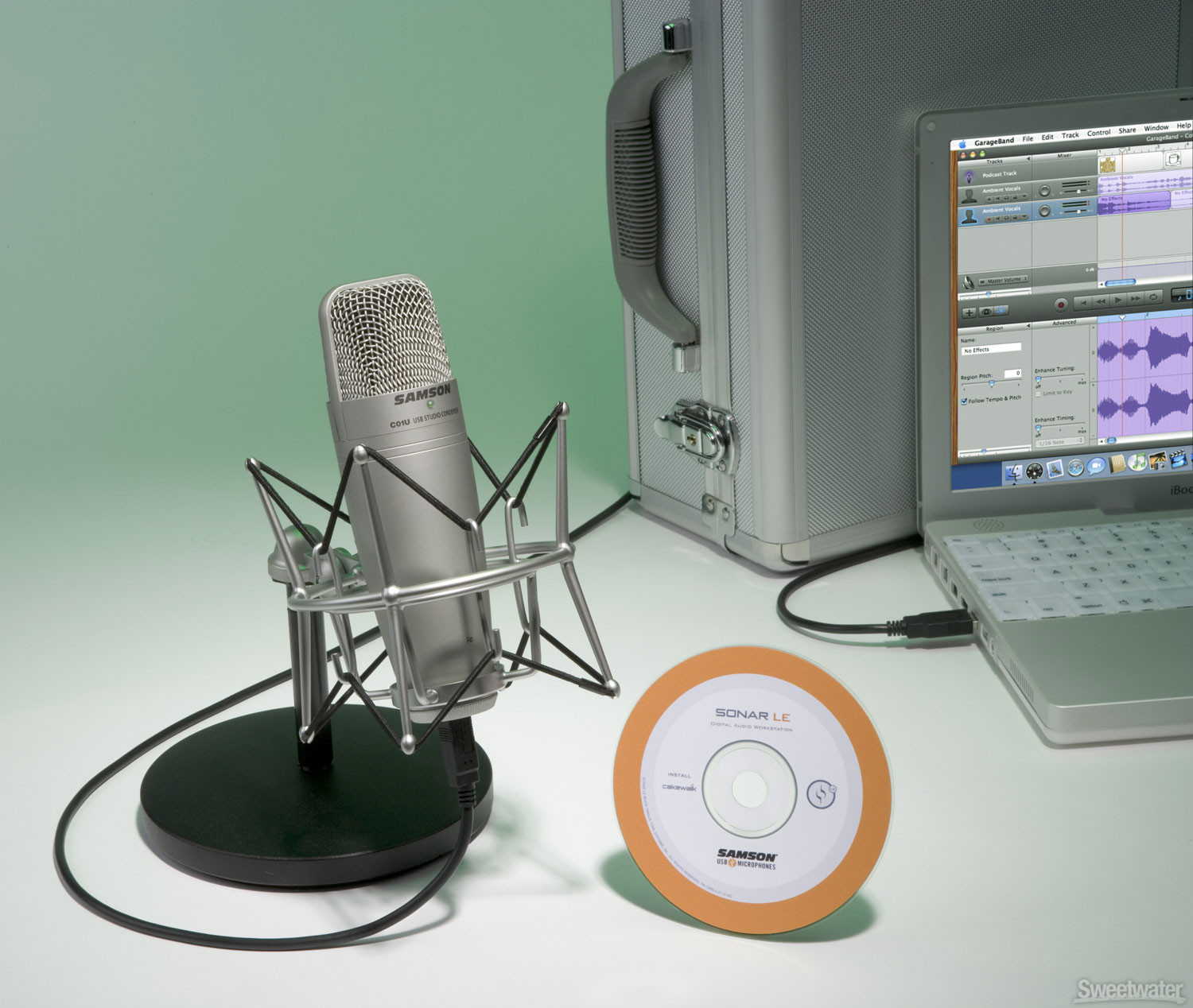
Samson C01U USB microphone

The advent of computer technology, particularly the USB functions, has brought birth to new types of music equipment such as USB microphones. One brand which I encountered on its debut appearance and was able to test for a couple of weeks is the Samson C01U USB microphone.


Built out of aluminum structure, the Samson C01U USB microphone is durable, sturdy and compatible for use  for both PC and Mac computers.  When using a conventional mic, you need to have an audio interface first connected to the computer and you connect the mic to the interface. With a USB mic, the process is simpler; just plug it to a USB input and it's ready for use.

It is a fact that digital recording has taken over analog and more and more people are getting into it. By using computers and DAWs (Digital Audio Workstation) for music production, the processes involved has become more easy and faster. Although there are still a lot of hard-core analog users, for the majority of the population, digital is more practical particularly because it costs less. USB mics like the Samson C01U has become an integral part of this new system of recording.

The Samson C01U USB  mic has a large diaphragm and very user-friendly; just plug it in and use it. No interface, pre-amps, direct boxes or whatsoever. Takes out all the hassle from setting up conventional mics with mixers.

You must bear in mind that the Samson C01U USB microphone is uni-directional, which means it is not suited for capturing the acoustics or ambiance of a full room. Recording vocals and acoustic guitars went on great with this USB mic and I've used it as overhead for the ride cymbals and it worked fine as well. I've experienced no latency and the quality was similar to a conventional large diaphragm Audio Technica condenser mic which I used to have.

The Samson C01U USB microphone's price might be a bit tricky as it's being sold for a range of US$70 to US$240 depending on the dealer, a bit strange why the big differences in the price range, so it's up to you where to get it at a steal. For quick recordings like podcasts with very minimal set-up, this will do the job, but it could handle serious music production as well. In the end, it's not just about the gear but the user counts a lot as well.

Other technical info on the Samson C01U USB microphone:

Frequency response: 20 - 18,000 Hz
Polar pattern: Hyper-cardioid
Element type: Electret condenser type
Diaphragm thickness: 3 microns
SPL: 136 dB Max.
Dimensions: 7” x 2.125” x 2.125”
Weight: 1.06 lbs.

***A Gizmo Guerilla Music Gear Review

Sennheiser e815S - the affordable mic

For the performing musician on a budget, the Sennheiser e815S is a perfect mic solution which could be used for almost anything. It could also serve as an emergency back-up mic or something you could use for rehearsals. The Sennheiser e815S is priced at US$49.99 a piece or US$110 for a pack of 3 mics. This is great deal for a mic which can be used for professional applications.


Aside from vocals, the Sennheiser e815S could also be used to mic-in guitar or bass amp cabinets and percussions and blowing instruments. Like soldiers who need extra or back-up guns, musicians and studios need back-up mics. At one point or another, by wear and tear, the mics you are using will break down. It's not a question of if but when.

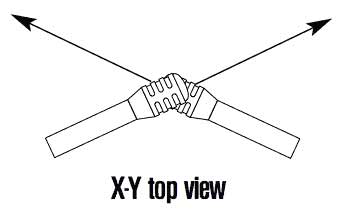
I personally happen to have the Sennheiser e815S pack of 3. I use it to record client demos in my studio back home. At one time I recorded a choir of 10 people using just 2 of the mics and applying the XY mic'ing technique. With the proper gate, compression and EQ settings, I was able to record the choir with quality results. The client wanted it to sound like it was sung inside a church, so bit of cathedral reverb was aslo added to the mix. I then recorded them again for double track and what we got was like a huge choir section inside a big cathedral.


For my preference, the Sennheiser e815S had bit too much presence on the mid-highs so just a little tweak on these frequencies did the job. The S meant it had an ON/OFF switch which some singers would favor and some would not. Having a switch on a microphone is good in conditions wherein you don't have a permanent sound-guy on the board watching out for feedbacks, so if something happens, one could easily turn the mic off if its the culprit. However, on some occasions vocalists tend to switch off the mic by accident in the middle of a song. I personally used it for several weeks before going back to my ever trusted SM58, but I think it performed quite well specially in songs which needed lots of highs and airy-type of singing or falsettos. It's unfair to fully compare the Sennheiser e815S to microphones way above its price range, but for the price it's being offered, it's worth having it around.

For Guides on Singing, Click Here!

***A Gizmo Guerilla Music Gear Review
Sunday, 27 June 2010

AKG D112 Kick Drum Mic

Referred by many as the best kick-drum microphone in the world, the AKG D112 Kick Drum Mic's reputation in the music industry is unmatched. It is a large diaphragm dynamic microphone with a very high SPL well able to handle up to 160 dB without having distortion, this kick drum ic can handle the heaviest footed drummer out there. It;s diaphragm is carefully engineered so that the low resonance frequencies handle frequencies below 100Hz very well having a powerful and solid response. There is also a natural rise at around 4kHz (meaning no EQing or very little) which gives out clear punches and presence of sound. So what do you have? A kick drum which delivers powerful, punchy notes which cuts but still maintaining the body needed. When purchased, the AKG D112 Kick Drum Mic comes with the SA 60 stand adapter.

Personally, I've used this mic in studios and many live applications. Now, it is still the one we use for daily abuse in a bar, and night by night it delivers superb sound and performance without a twitch. We've never encountered distortion, booming or feedback ever, and yes, we do play very loud. I use the AKG D112 Kick Drum Mic with a compressor-gate. I set the EQ to a level where the bass will boom and cuts it with the gate almost instantly and add highs at around 12kHz and boost it at 5kHz. The gate cuts of the boom and the highs gives presence so I have a huge drum sound that cuts through and well defined even for fast double bass patterns. But you must be aware that for different venues and conditions, EQing would vary a lot, so what would work for me might not for you. For example, we play in bar where there are mostly mirrors and steel within the interior, this means it will complement a lot of high frequencies. Vice-versa a well padded venue would produce lows. A fully packed venue will sound very different from a venue with very few people. It's knowing the acoustics of your venue, the sound you want and your ears that matter most when it comes to setting the proper equalization.


Technical Features of the AKG D112:

A classic Large-diaphragm dynamic microphone for bass instruments with extremely high SPL capability
Extremely high SPL capability - Handles up to 160 dB SPL with no audible distortion
Classic microphone for stage and studio applications
Frequency Range: 20 Hz to 17 kHz
Polar Pattern: Cardioid
Sensitivity: 1.8 mV/Pa (-55 dBV)
Impedanc e: 210 ohms
Size: 150x70x115 mm (5.9x2.8x4.5 in.)
The AKG D 112 has a built in windscreen and SA 60 stand adapter included

For the online price average of US$160, it's well worth it!

***A Gizmo Guerilla Music Gear Review

Saturday, 26 June 2010

Shure SM57- the most versatile mic on the planet

Another music industry standard brought to us by Shure is the SM57 microphone. With a price tag of a hundred US dollars on the average, this mic is very cheap compared to what it can do at par with other microphones maybe ten times its price.


A proven workhorse of recording studios around the world, the Shure SM57 is one of the most versatile mic you can find being able to record almost anything! It can be used for vocals, as guitar amp mic, acoustic guitar, drums, maybe anything that produces sound. The Shure SM57 is also great in capturing ultra loud sound sources like distorted guitars and drums. In fact, you could hear the Shure SM57 on literally thousands and thousands of recordings made.

Similar in some ways to the Shure SM58, the SM57 is also a dynamic mic that does need phantom power unlike its more expensive condenser mic counterparts. Although the two mics are nearly identical in nature, the SM58's round wind-pop screen makes it ideal for vocals. The SM57 does not have this so one would need to be very near to be able to sing properly with it, but it is perfect in catching a directional sound due to the nature of its top. From personal experience, comparing both mics with vocals, the SM58 produce more low and low-mid frequencies while the SM57 proved excellent on mid-high ranges which is why a lot of people who speak in public prefer it, due to the clarity.  For mic'ing drums, I use SM57 on the snare top and bottom,  as well as toms 1 & 2 and the hi-hats, then SM58 for the low tom and a dedicated kick drum mic. If needed some condensers for the overheads. A majority of rappers also prefer the Shure SM57.

Simply put, like the SM58, the Shure SM57 is a tool any sound engineer or studio musician should have. There was a time when I was in a situation to record with limited gear, I used only one SM57 to record the bongos, tambourine, shaker, acoustic guitar, snare (brush), main vocals and a group of 4 singers doing harmony back-ups! Yes one mic was all I needed and it went like a breeze and the final mix was approved without revisions. The money was also good for that project. I wonder what they'd say if they only knew I only used one SM57 mic, an old laptop (using its own factory stock soundcard) and a lot of guts... hahaha

***A Gizmo Guerilla Music Gear Review
Shure SM58 - built to last

Undoubtedly, the Shure SM58 is the most used and most seen microphone in the world making it the industry standard. From humongous live concerts, to small bars, project studios and professional recording releases, the SM58 is a prime contender if not King. I don't know any musician who hasn't encountered this microphone. It is preferred by majority of live sound and studio engineers and artists as well. It's reputation is legendary and aside from that, it is almost indestructible!


Average price is also very cheap at US$100. Over the years, the SM 58s we've used had gone through rigorous abuse such as dropping from the stage 10 feet below, mic stands falling and hitting walls, deliberate throwing by vocalists and more. But still, it works without no change in the sound quality output. The only part that get's damaged most times is the pop shield which could be easily replaced and very cheap as well.

The Shure SM58 is a dynamic mic with low output and a presence peak in the upper mid range frequencies making it best for vocals. Its frequency response is rated at 50Hz to 15kHz with a polar pattern uni-directional cardiod pick-up. It is also equipped with a pneumatic shock-mount system which cuts down noise when handling.

My musical career spans more than twenty years and in my experience, a Shure SM58 is a must-have. For live and recording, I've used it for vocals, guitar and bass mic-in, ambience, cymbals, snare and even for the kick. For those occasions, it did not just serve its purpose but it actually did quite well even in areas it was not  supposed to be used for. Since this mic has been so widely used, the sound it delivers is very recognizable which made it a music industry standard.

Technically, the Shure SM58 is very good with the mid-ranges and the bass is boosted as the singer's lips is nearer the pop shield, but the highs roll off to quickly. Some find this feature a disadvantage while others favorable because it lowers the risk for feedbacks during live performances but some singers look for that high sibilance. But then there are always EQs and compressors to compensate or complement these technical requirements.

As a live and studio musician, I don't think I can live without having the Shure SM58 in my arsenal.


***A Gizmo Guerilla Music Gear Review